
What anonymous visitor tracking actually is
Anonymous visitor tracking is recording what happens on your site without tying any of it to a real, named person. The tool sees a visit, notes what the visit did, and files it under a random identifier that means nothing outside your analytics. It knows a browser looked at three pages from a phone in Berlin. It does not know that browser belongs to Anna.
That is the default state of almost all web analytics, and it is worth understanding clearly, because the gap between "anonymous" and "identified" is smaller and more deliberate than people assume. You can learn a great deal about your visitors in aggregate while knowing nothing about any single one of them, and for most decisions that is genuinely enough.
What you can know without knowing who they are
Strip away identity and you still keep almost everything useful. Anonymously, a tracker can still tell you how many people came, where they came from, what device they used, roughly where in the world they are, which pages they viewed, and how long they stayed. That is the entire toolkit from what a visitor tracker shows you, minus the names.
The location is deliberately coarse. Good analytics infers a country and often a city from the visitor's network, but not a street address, and privacy-minded tools hash or truncate the underlying data so even they cannot reverse it. So you can know that traffic from one country converts better than another, without knowing a single individual in either. For spotting what works, aggregate patterns are usually the real answer anyway, and user tracking analytics at that level asks nothing invasive.
Cookieless tracking, and why it is rising
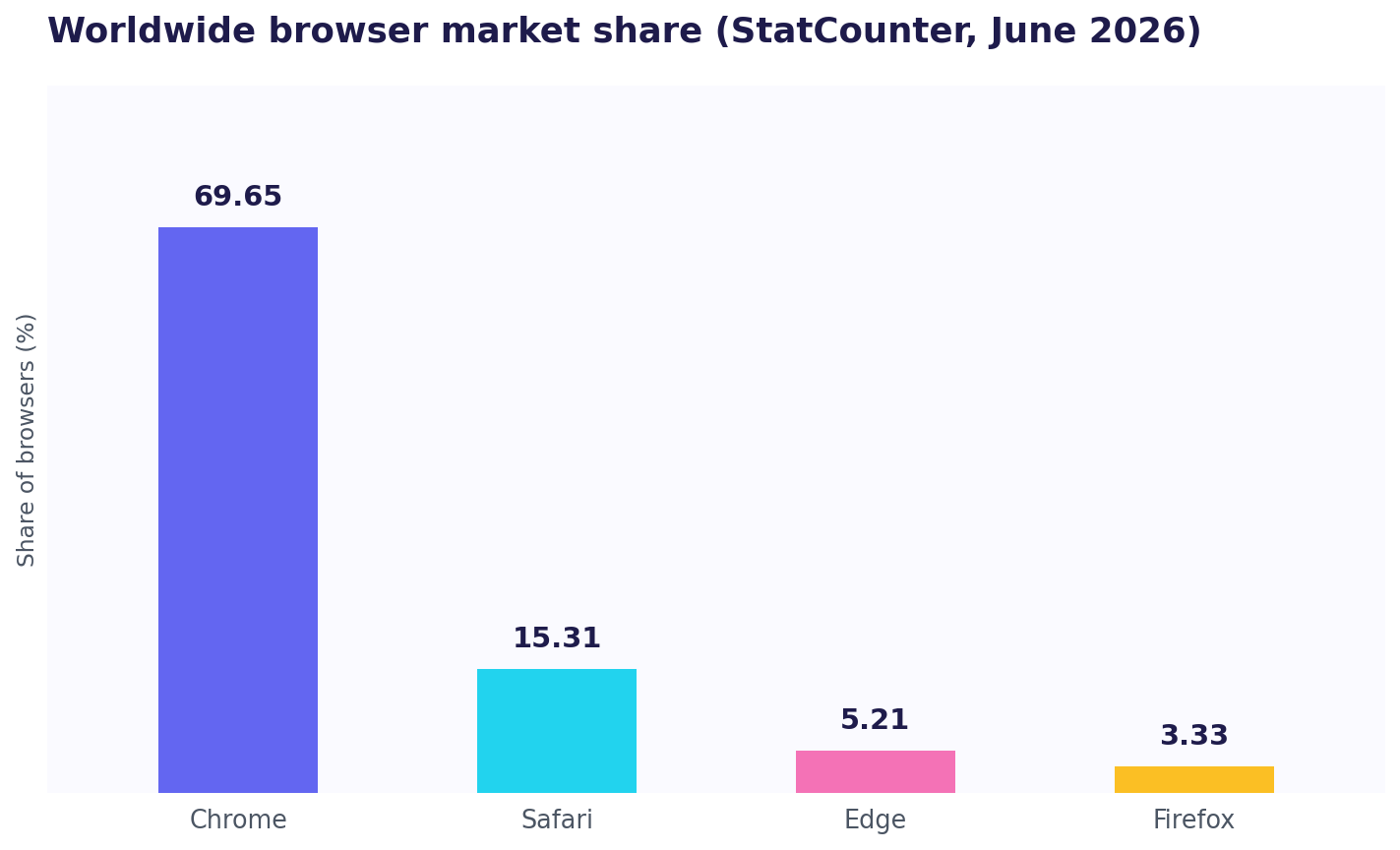
For years the random identifier lived in a cookie, a small file stored in the browser. That is getting harder, on purpose. Safari and Firefox already block third-party cookies by default, and between them they account for a meaningful slice of the web: StatCounter put Safari at 15.31% and Firefox at 3.33% of global browser share in June 2026 (StatCounter), so close to a fifth of browsers already refuse the old cross-site cookie outright, before you even reach privacy laws and consent banners.
Cookieless user tracking is the response. Instead of a durable cookie, privacy-first tools use a first-party identifier, or a daily rotating hash of things like the visitor's network and browser that resets every 24 hours and cannot be traced back to a person. You lose some precision, mostly around recognising the same visitor across many days, and you gain a method that keeps working as cookies fade and that sidesteps a lot of consent complexity. For a small site, that is often a good trade.
Where the line actually is
Here is the part that matters most. The line between anonymous analytics and tracking real people is not a technical accident. It is a choice, and it is usually consent.
Anonymous is the honest default: count and analyse without ever identifying anyone. Crossing into identified tracking, knowing that this exact visit was a specific person, should happen only when that person has handed you the link, clicked through, or opted in. That is a completely different thing from silently unmasking strangers. ScoutVibe is built on exactly this split: visitors are anonymous by default, with hashed IPs and city-level location only, and a visit becomes tied to a known individual only through a link you gave that person on purpose. Consent is the line, not capability.
The honest limit
Anonymous tracking is powerful for the aggregate question, how is my site doing, and deliberately blind to the individual one, who was that and what did they do. That blindness is a feature for privacy and a limit for a founder who genuinely needs to know whether one specific prospect engaged.
The answer is not to strip anonymity from strangers. It is to let the people you are actually talking to identify themselves, through a link meant for them.
Anonymous analytics answers how your site is doing. It cannot tell you whether one specific prospect engaged. ScoutVibe keeps visitors anonymous by default and lets the people you are talking to identify themselves through a link meant for them, so you learn who without unmasking strangers. The free tier covers your next launch.
Try ScoutVibeFAQ
What can I actually learn from a visitor if I never know who they are?
Almost everything useful in aggregate: how many people came, their source and medium, device and browser, a rough country or city, which pages they saw, and how long they stayed. What you give up is only the identity, the name behind the visit. For deciding what is working on your site, the anonymous, aggregate view is usually the one that actually answers the question.
What is cookieless tracking, and why does it matter?
It is visitor tracking that does not rely on a durable browser cookie, using instead a first-party identifier or a daily rotating hash that resets and cannot be tied to a person. It matters because Safari and Firefox already block third-party cookies by default, roughly a fifth of browsers between them, and privacy laws add consent requirements on top. Cookieless methods keep working as cookies fade, at the cost of some precision in recognising a visitor over many days.
Where is the line between anonymous analytics and tracking real people?
Consent. Anonymous analytics counts and analyses without identifying anyone and should be the default. Tying a visit to a specific known person should happen only when that person opted in or clicked a link you gave them, never by silently unmasking a stranger. The capability difference is small; the consent difference is the whole point.